Free home exercise guide
Pes anserine pain
A gentle starting plan for pain below the inside of the knee. Use it after pes anserine pain has been identified; inner-knee pain can have other causes. Follow your clinician's restrictions after injury or surgery.
BoneArc patient education · Updated November 16, 2026
Download the plan (PDF)2 pages · no sign-up
Start by reducing irritation
Reduce the activities that bring on pain: hills, repeated stairs, running or kneeling. Keep comfortable movement; do not push through a flare. Cycling or swimming is an option only if it does not aggravate symptoms.
Let symptoms guide the dose
- Start with a small, comfortable range and fewer repetitions. The amounts below are starting examples, not a prescription for everyone.
- A stretch should feel like gentle muscle tension, not pain at the inside of the knee. Stop any exercise that causes sharp or increasing pain.
- Do not progress if pain, swelling or walking is worse later that day or the next morning. Reduce the last dose or return to the easier stage.
1. Settle symptoms and keep moving
Use comfortable movements only. Try one short session daily; skip any movement that irritates the tender area.
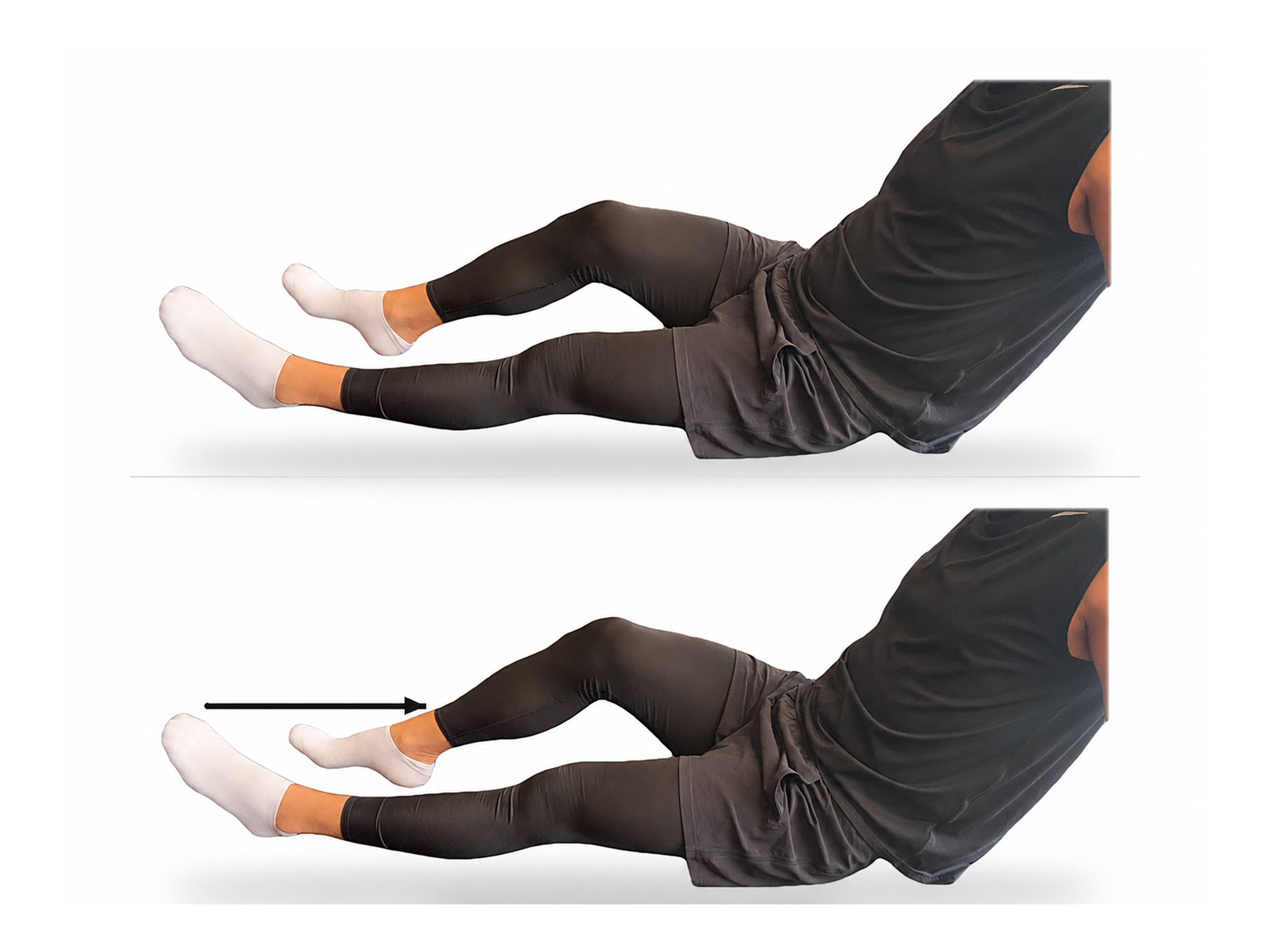
1Symptom-guided exercise
Heel slide
Lie on your back. Slide the heel toward you, then away, keeping the knee pointed up. Stay within an easy range; do not force a deep bend.
Start with 5-10 slow repetitions.
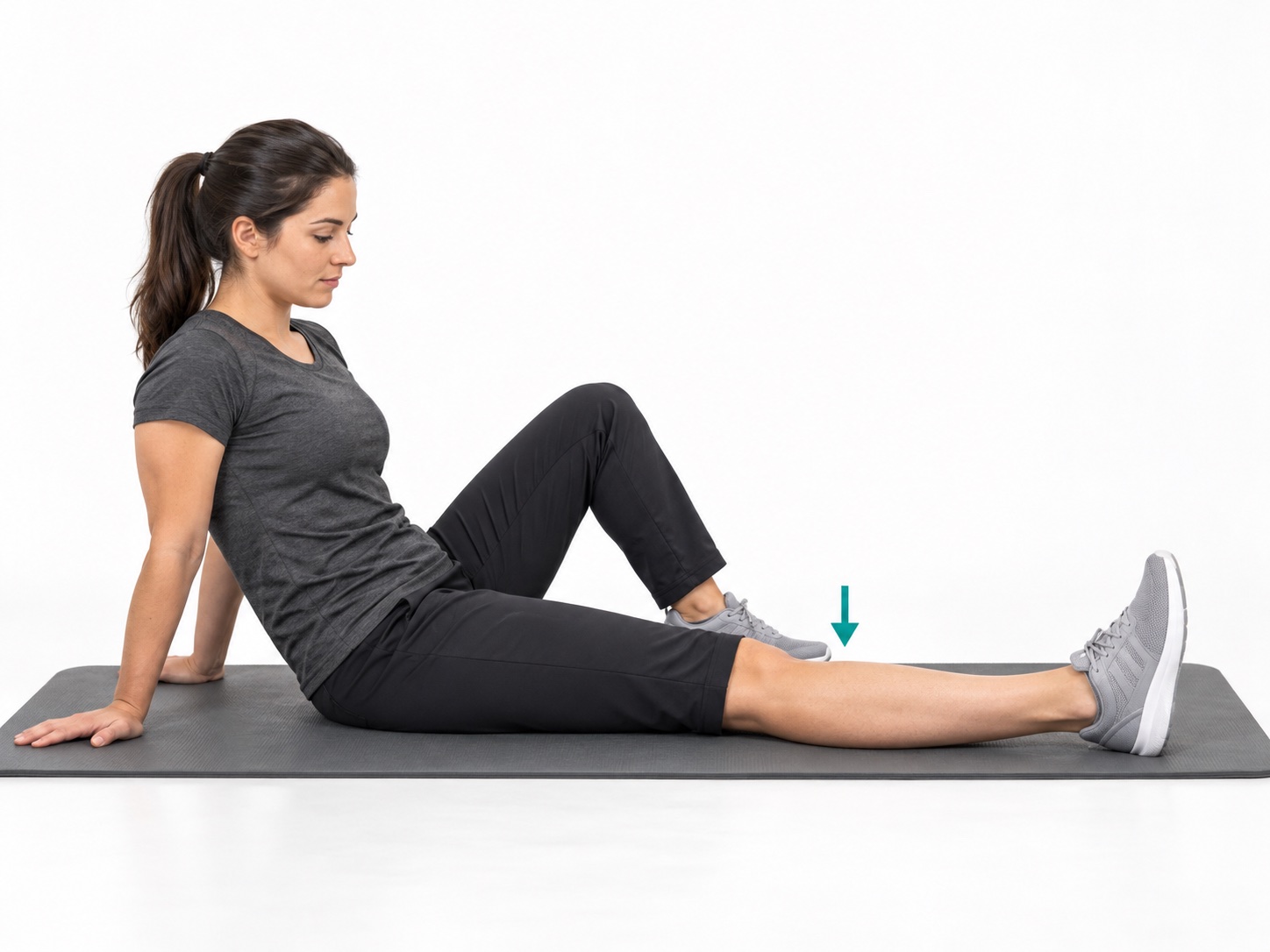
2Symptom-guided exercise
Quad set
With the leg supported and straight, tighten the front of the thigh and gently press the knee toward a folded towel. Relax fully between holds.
Start with 5-10 holds of 5 seconds.
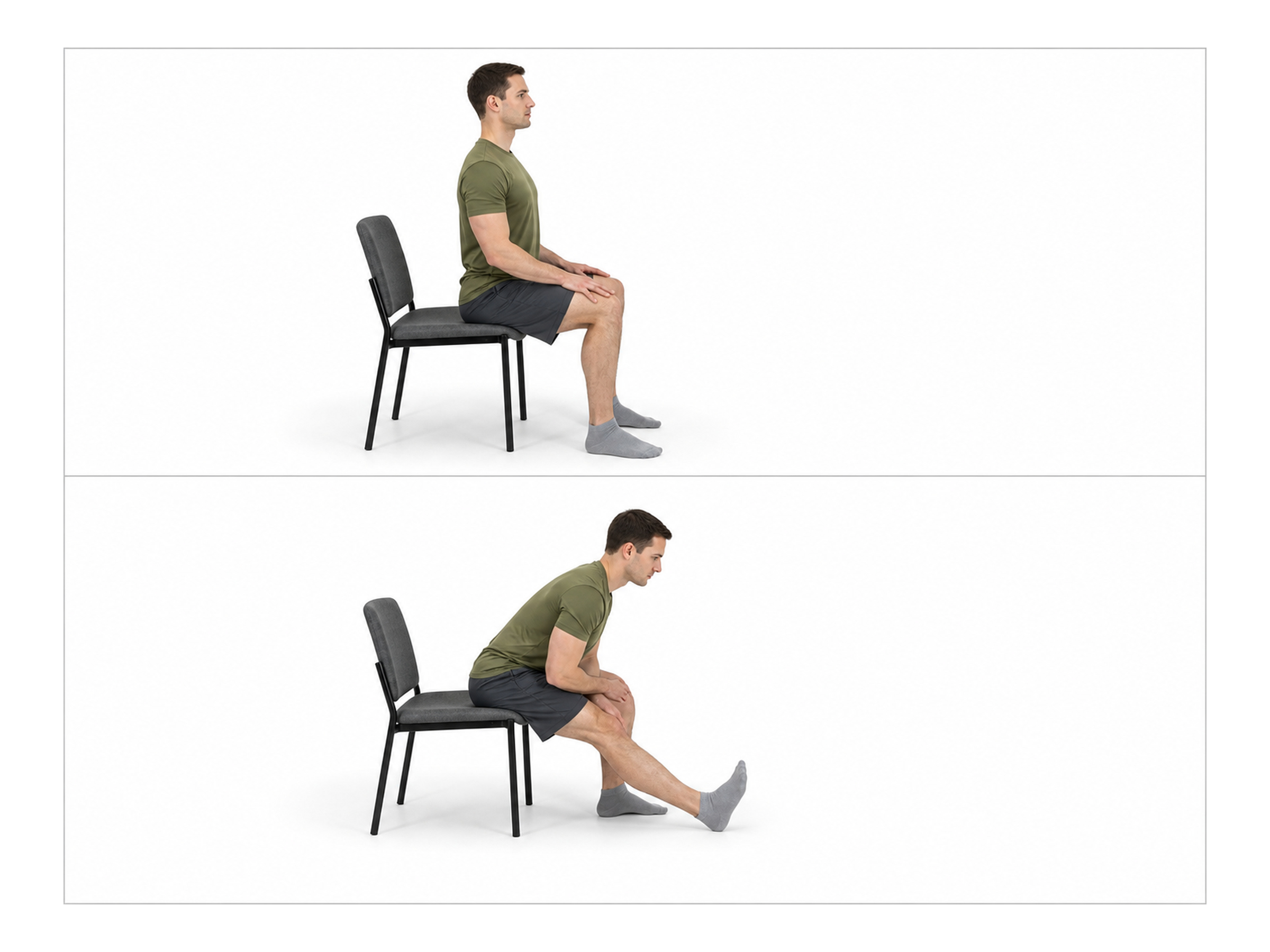
3Symptom-guided exercise
Gentle hamstring stretch
Sit with one heel forward and the knee comfortably straight. Hinge slightly at the hips until the back of the thigh stretches. Do not press on the knee.
Hold 15-30 seconds, 2 times; no inner-knee pain.
2. Build strength as irritation settles
Add these when stage 1 and ordinary short walks are comfortable without a next-day flare. Start with one set on alternate days; add repetitions before a second set.
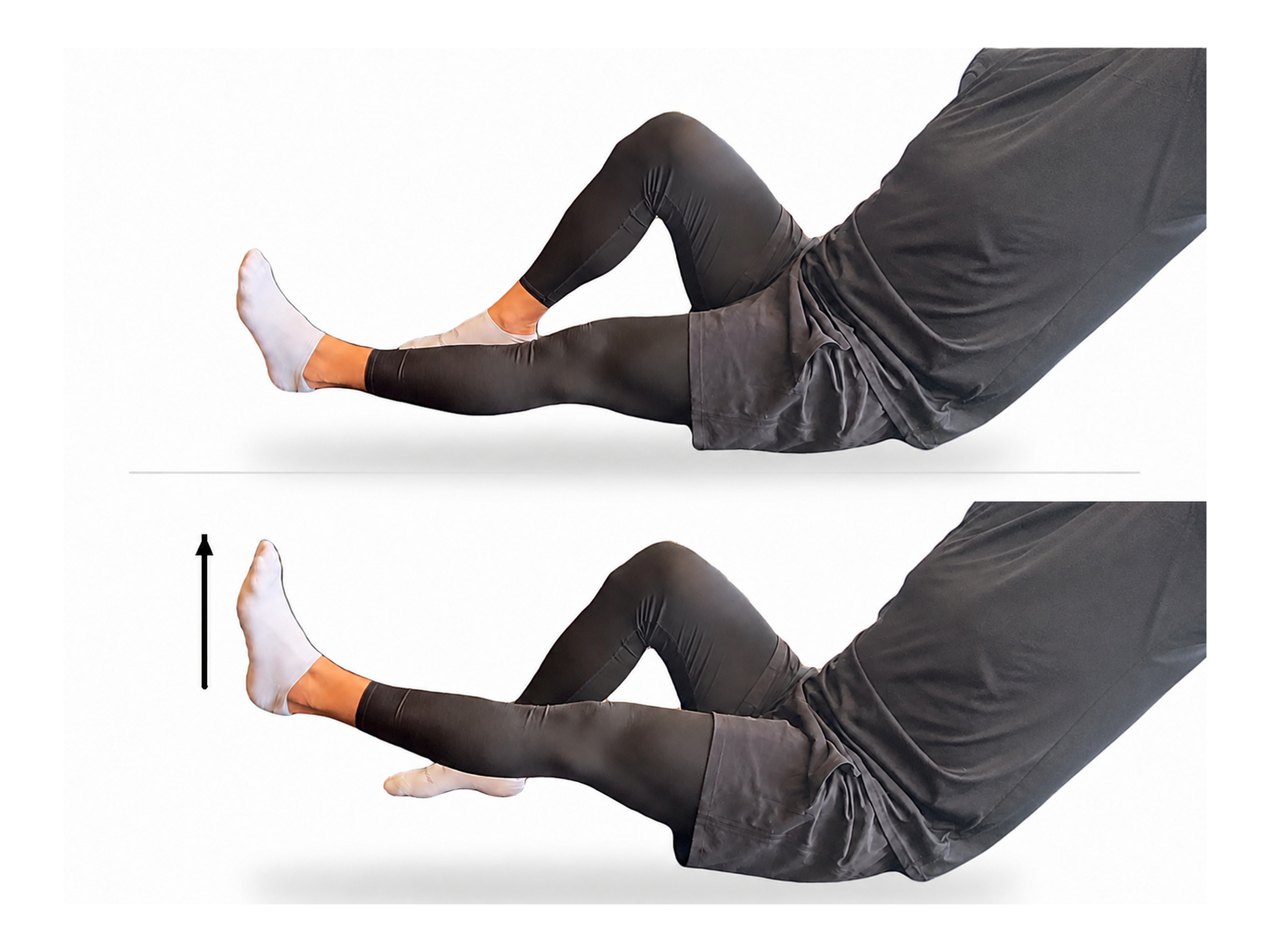
4Symptom-guided exercise
Straight leg raise
Lie on your back with the other knee bent. Tighten the thigh, keep the working knee straight, lift slowly to the height of the other thigh, then lower. Skip it if the knee bends or it hurts.
Start with 5-8 repetitions; build toward 2 sets of 10.
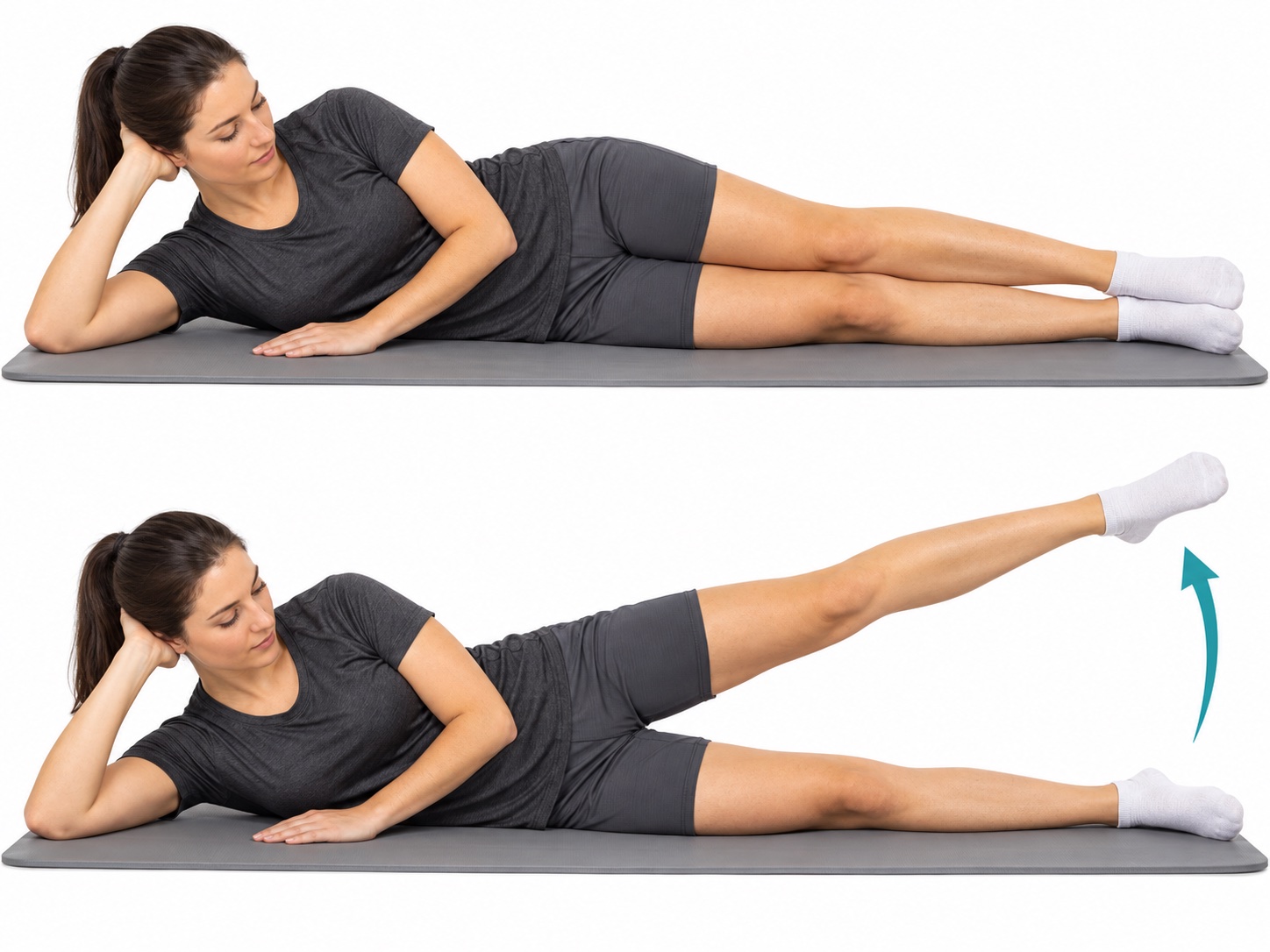
5Symptom-guided exercise
Side-lying hip abduction
Lie on your side. Keep the top leg straight and in line with your body. Lift a little without rolling backward, then lower slowly.
Start with 8 repetitions; build toward 2 sets of 10.
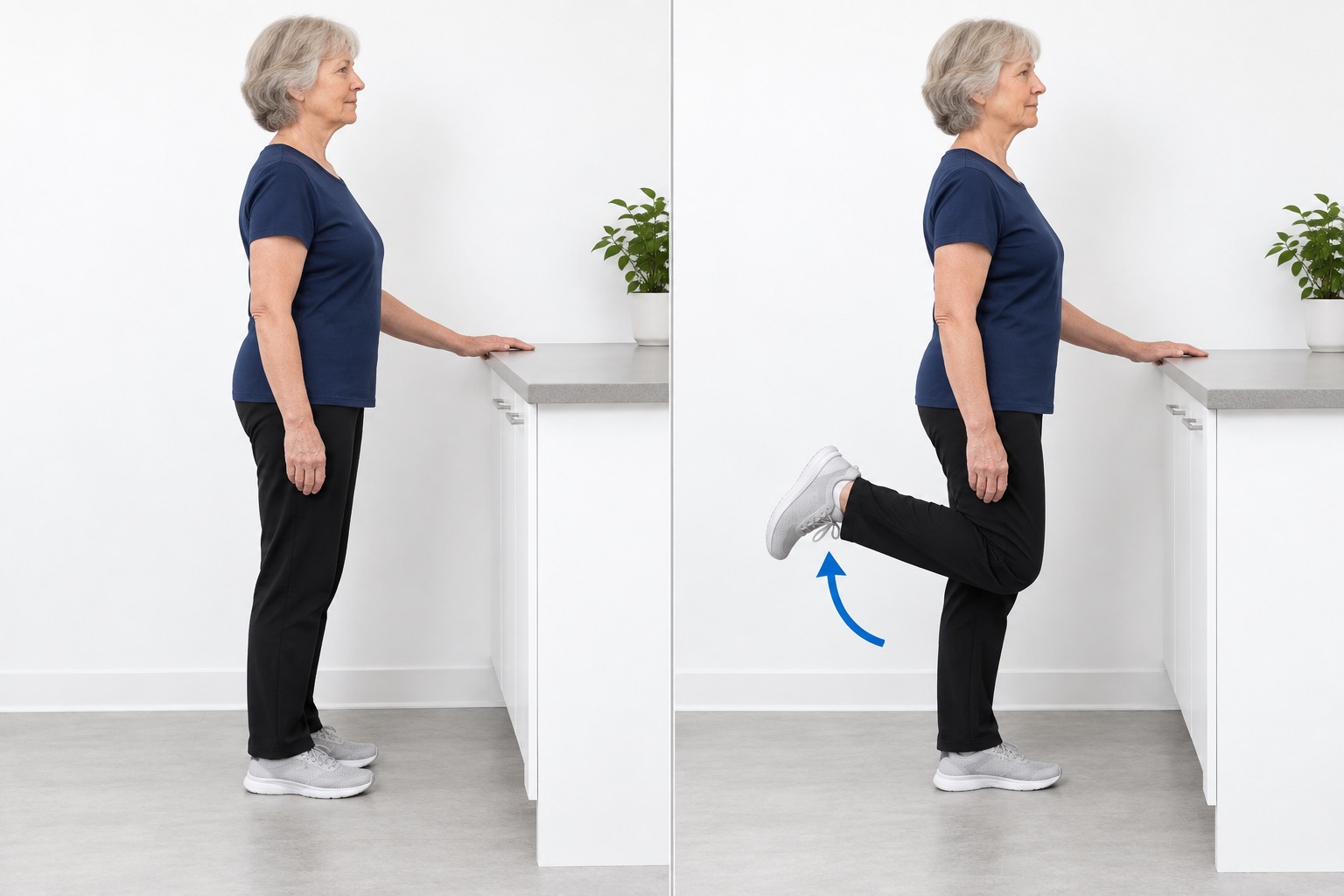
6Symptom-guided exercise
Supported hamstring curl
Hold a fixed counter. Slowly bend the working knee to lift the heel behind you, then lower. Start without a band or weight. Stop if it reproduces inner-knee pain.
Start with 5-8 repetitions in a comfortable range. Add resistance only with clinician guidance.
3. Return to loaded movement
Add this when walking and stage 2 are comfortable, with no increased pain or swelling the next morning. Increase one thing at a time: repetitions, depth or activity duration.
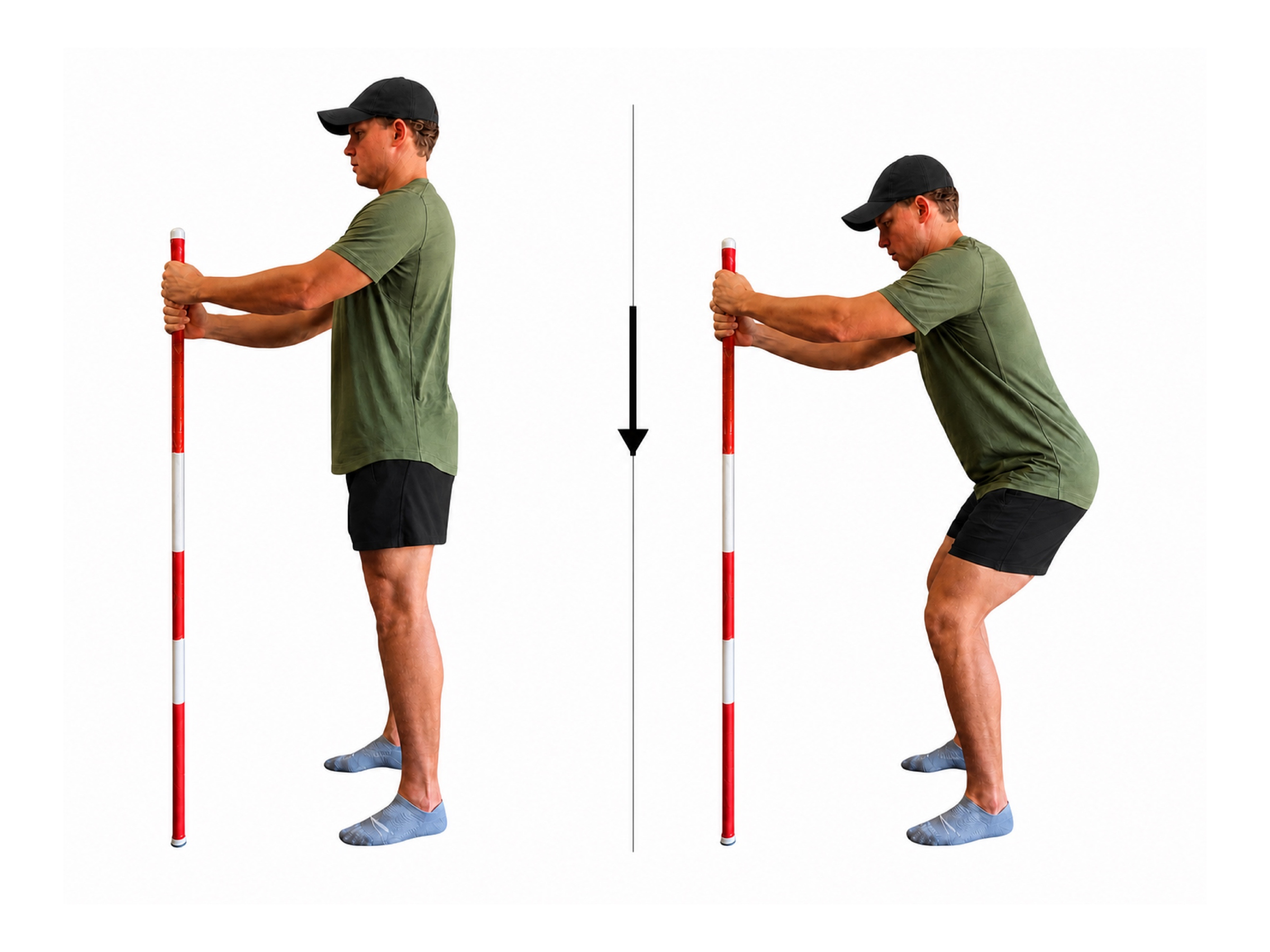
7Symptom-guided exercise
Supported mini squat
Hold a fixed counter. Sit the hips back into a shallow bend, keeping knees in line with feet, then stand. Avoid a deep squat; use a smaller range if needed.
Start with 5 repetitions on alternate days; build toward 2 sets of 10.
Between sessions
If helpful, use a wrapped cold pack for 10-15 minutes after activity. Do not put ice directly on skin. Build walking on level ground before returning to hills or running.
When to get checked
Get prompt medical assessment for a hot, red or rapidly swollen knee, fever, inability to bear weight, or a significant new injury.
Arrange a clinical review if the knee locks or gives way, symptoms worsen, exercises repeatedly trigger a flare, or there is no clear improvement after 2-3 weeks. Do not wait for the plan to end if you are getting worse.
General education, not a diagnosis or an individually prescribed rehabilitation program. Stages and starting doses are BoneArc's practical organization of the guidance below, not a validated protocol or a guarantee of recovery.